
Planning a wedding is one of the most exciting and overwhelming things a couple can do together. There are big decisions that seem impossible to get wrong, like picking your venue, and small details that turn out to matter far more than anyone warned you about. The ten tips below come from genuine experience. These are the practical pieces of advice that brides wish they had heard at the very beginning of the process rather than the week before the wedding. Read them once now, then save this page and come back to it throughout your planning journey, because different tips will feel most urgent at different stages.
1. Set Your RSVP Deadline Weeks Earlier Than You Actually Need It
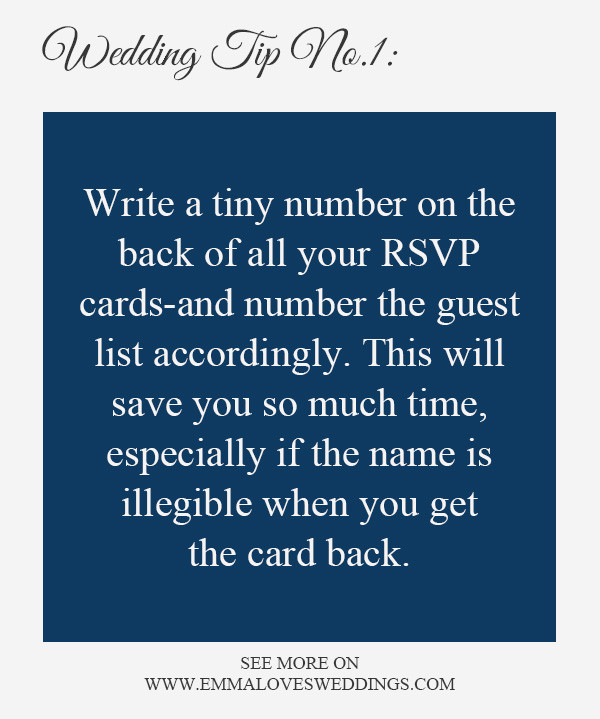
RSVP deadlines are a game, and every couple learns this eventually. You set a deadline of six weeks before your wedding, and ten percent of your guests will still not have replied when that deadline passes. Then you spend the following two weeks chasing them down personally before you can finalize your numbers for the caterer and venue. This is predictable, and you can protect yourself from it entirely by building buffer time into your timeline from the start.
Set your printed RSVP deadline for eight to ten weeks before the wedding, not the four to six weeks that most stationery templates suggest. This gives you genuine buffer time to follow up personally with non-responders and still deliver final numbers on time. Keep a spreadsheet from the moment invitations go out. Track who has confirmed, who has declined, and who has not replied. Note the date you followed up with each non-responder so you can see at a glance whether they have been contacted or not.
One additional tip on RSVPs that most planning guides overlook: do not rely solely on the return card. Some guests, particularly older family members, will call your parents to RSVP rather than using the card. Make sure whoever is receiving those calls is updating the same spreadsheet you are maintaining, or you risk having your numbers significantly off when you compare lists.
2. Start Addressing Thank You Note Envelopes Right Now
The thank you note mountain is a real phenomenon that catches couples completely off guard. You receive gifts in waves throughout the engagement: at the bridal shower, at the wedding itself, and in the weeks that follow from guests who could not attend in person. Without a system, writing thank you notes becomes a genuinely daunting task that stretches out for months and leaves you feeling guilty every time you think about it.
The trick is to start addressing envelopes the moment you create your guest list, before you even send invitations. Add names and addresses to envelopes as you finalize the list. Keep a gift log from day one: who gave what, when it arrived, and any personal detail from the card that will help you write a specific rather than generic note. When it comes time to write the notes, you will already have the envelopes addressed and the specific information you need to make each one feel personal.
Many couples find that batching this task makes it feel manageable. Writing ten notes per night over the course of a few weeks is far less overwhelming than facing a pile of a hundred at once. Set a small daily target in the weeks after the wedding, make a cup of tea, and work through them consistently. The earlier you establish this habit, the less daunting the overall task feels.

3. Build Your Seating Plan at Least Three Weeks Out
The seating plan is one of those tasks that feels like it should be simple and turns out to be surprisingly complex. Family dynamics that have shifted in the years since you assembled your guest list, friendship groups from different phases of life who do not know each other, plus-ones who are strangers to everyone at their assigned table, dietary restrictions that affect placement near the buffet, and the inevitable last minute cancellations all conspire to make it harder than you expected.
Start earlier than you think necessary and use a digital tool rather than paper. A seating plan app or simple spreadsheet lets you drag and drop guests between tables and instantly see when a table is over or under capacity. Build in a buffer of two or three empty seats per table to absorb adjustments without requiring a complete restructure. This buffer also gives your catering team a small margin for changes that come in after your final numbers are submitted.
Assign someone other than yourself to manage any seating questions that arise on the wedding day itself. Brief them on where the spare seats are, which tables have flexibility for additions, and who the key people are to contact if a major change is needed. You should absolutely not be solving seating problems on your own wedding day, and having a designated person who knows the plan means you never have to.

4. Break In Your Wedding Shoes Properly
Wedding shoes are probably the most consistently underestimated planning detail on this list. Most people know they should wear their shoes before the wedding, but very few take this seriously enough. Wearing them for twenty minutes around the house on carpet is not breaking in shoes. Breaking in shoes means wearing them for several hours on hard floors, standing, walking, greeting guests, dancing, and navigating uneven outdoor ground.
Practical approaches that actually work: wear your shoes to a dinner or event in the week before the wedding, ideally on a floor type similar to your venue. Wear them while doing housework to build up genuine wear time. If they are leather soled, have a cobbler rough up the sole slightly so they grip without slipping on polished floors or wooden dance floors. Use moleskin padding inside if any areas are rubbing.
And pack a backup pair. This is not admitting defeat. It is practical wisdom. A pair of simple flat sandals or ballet flats in a small bag under the head table means that when your feet are genuinely tired and sore after hours of celebrating, you have an option that lets you keep dancing rather than sitting on the side. Almost every bride who brings backup shoes uses them, and every single one is grateful they did.

5. Write Your Partner a Letter the Morning of the Wedding
This is one of those tips that sounds optional until you see a couple who actually did it. Writing your partner a letter on the morning of your wedding, before you see each other, sealing it, and either exchanging them privately or reading them aloud together during a first look, is one of the most genuinely moving things you can choose to do on your wedding day. It costs nothing. It takes perhaps thirty minutes. And the result is a keepsake that you will return to for the rest of your lives together.
These letters do not need to be literary masterpieces. They need to be honest. Write what you are feeling that morning. What you are looking forward to. What you love about the person you are about to marry. Write about a specific memory that captures why this person is your person. Write about what you are hoping your life together looks like in ten years. Whatever is true for you that morning is exactly the right thing to put in the letter.
Keep both letters together in a safe place after the wedding, perhaps in the same box as your invitation suite, and read them again on your first anniversary. The experience of reading your partner's words from that morning, written with the specific emotions of the day still fresh, is something that genuinely cannot be replicated by any other wedding detail. It is a gift you give each other and your future selves simultaneously.


🦋FREE Wedding Planning eBook!
Hundreds of money-saving ideas from wedding experts.
Packed with useful planning ideas and tips, a finance tracker and free checklists.
By downloading, you accept our Downloading Terms of Use and Privacy Policy.
6. Put Your Jewelry On Absolutely Last
This is a practical tip that saves many brides from minor but genuinely frustrating disasters on the morning of the wedding. The order should be: hair first, then makeup, then dress, then jewelry. This specific sequence protects against a range of small problems that, on a high-pressure morning, can feel enormous.
Necklaces can catch on veils or hair when put on before pinning is complete. Earrings can pull on hair extensions or delicate updos that are not yet fully set. Bracelets and rings can scratch delicate fabrics during the process of getting into the dress. And any jewelry put on before the dress creates an additional thing to navigate while wrestling with buttons, corsets, or a long skirt.
Putting jewelry on last, with the dress fully on and fastened and all hair and makeup complete, lets you see the complete look before making any adjustments, and it avoids all of the above. Your maid of honor or whoever is helping you dress should know this sequence too, since they are often the ones who get excited and hand you the earrings before the dress is on. Brief them on the order in advance so the morning runs smoothly rather than having to redirect in the moment.

7. Assign Someone Specific to Bustle Your Dress
The bustle is one of those wedding mechanics that sounds simple and causes real confusion when it actually matters. Most wedding dresses with a train have a bustle system, and those systems vary widely. Some have simple button loops. Others have complex ribbon ties or multi-point hooks that must be fastened in a specific sequence to work correctly. If no one has practiced this before the wedding day, the moment after your ceremony when you need your train bustled quickly becomes an unexpectedly stressful five minutes.
The solution is simple: before the wedding, have whoever is doing your bustle practice it in front of you with the actual dress. Do this during your final fitting if possible, with your seamstress there to explain exactly how her specific bustle system works. Then have your maid of honor practice it twice independently until she can do it without guidance. A bustled dress handled confidently in two minutes is a far better outcome than a group of three people puzzling over your train in a corner while guests are filing into the reception.
Also make sure your photographer knows the bustle is happening. Many photographers are not watching at the moment the bustle gets done, and if they miss that transitional moment, there can be a gap in the documentary sequence. Brief them as part of your timeline: immediately after the ceremony, before walking into the cocktail hour, the bustle goes on. Five minutes. Be ready for it.

8. Test Your Wedding Rings for Fit Well Before the Day
This sounds obvious and is nevertheless consistently neglected. Wedding ring sizing is affected by temperature, hydration, and recent activity levels. The size that felt right in the jeweler's cool, climate-controlled shop may feel noticeably tighter on a warm outdoor wedding day after hours of celebrating, hand holding, and dancing. This is not a disaster, but discovering it for the first time at the altar is not the ideal moment to find out your ring is not going to slide on easily.
Test both rings at different times of day over several days before the wedding. Try yours on in the morning and again in the evening, after you have been active. Make sure it slides off comfortably as well as going on, since a ring that goes on easily but gets stuck trying to remove it creates genuine anxiety. If the fit feels even slightly uncertain, return to your jeweler for an adjustment. Most jewelers can resize a ring in a matter of days, and many will do minor adjustments for free within a certain period of purchase.
Also think about where the rings will be during the ceremony. Assign a specific trusted person to hold them, know exactly who that person is and where they will be standing, and brief your celebrant on the process so there are no awkward pauses at the ring exchange moment. This two-minute logistical conversation before the wedding eliminates an entire category of ceremony anxiety.

9. Create a Full Vendor Timeline 48 Hours Before the Wedding
Your vendors are professionals who have done this many times. They do not need hand-holding, but they do need clear, confirmed information about timing. The most useful thing you can give every vendor in the week of the wedding is a complete, up-to-date timeline that includes their specific arrival times, the venue address and any access instructions, your personal contact number, your coordinator's number, and the names of the key people they will be working alongside.
Confirm this timeline with every vendor at least two days before the wedding. A quick email or call to confirm arrival times, clarify any adjustments that have happened since the original booking, and make sure everyone has the most current version of the schedule takes less than an hour and eliminates a significant source of day-of stress. Email is usually fine, but a direct phone call for your photographer, caterer, and any entertainment vendors adds an extra layer of confirmation that is worth the time.
Keep multiple copies of this timeline. One in your phone. One printed copy for yourself. One for your coordinator. And one in an envelope with your day-of emergency kit alongside safety pins, stain remover, pain relief, and anything else you might need. The timeline is your single source of truth for the day, and the people who need to consult it should be able to find it instantly rather than searching through messages.

10. Give Your Photographer an Essential Shot List
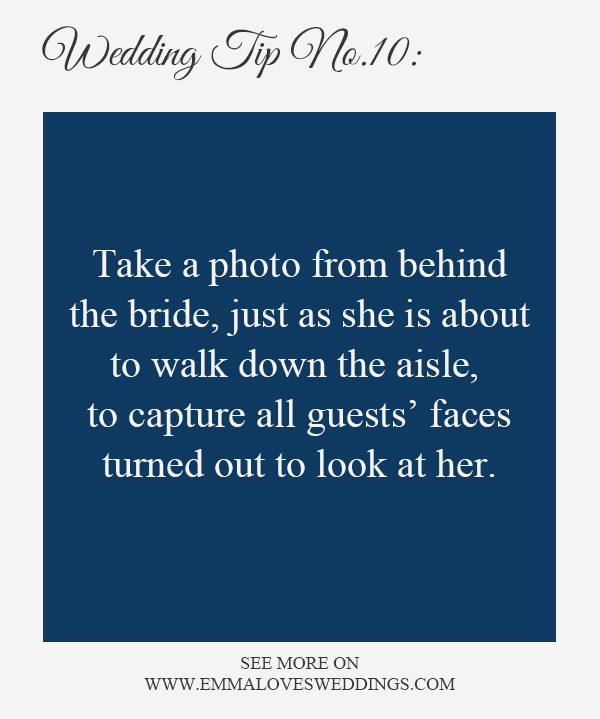
Your wedding photographer is talented, observant, and experienced at capturing moments as they unfold. They will photograph things you did not even know were happening. But they are not mind readers, and the specific family groupings that matter most to you are not something they can intuit from a brief conversation. An essential shot list solves this problem entirely and gives your photographer the information they need to move efficiently through formal portraits without repeatedly asking you who should be included.
A useful shot list covers specific family group combinations (grandparents with you, siblings together, each set of parents separately and together, any blended family combinations that need careful handling), any friends who mean enough to you to warrant a formal portrait, key detail shots like the rings, the dress hanging, the bouquet, the invitation suite, and the table settings, and any moments unique to your day that require the photographer to be positioned and ready in advance.
Introduce your photographer to key family members before the ceremony begins so they can identify faces quickly during the formal session without having to ask. Build enough time into your schedule to actually get the portraits you want. Each family grouping takes approximately three to five minutes to gather and photograph, and that time adds up quickly if you have a long list. A thorough shot list and a realistic portrait timeline protect you from discovering after the wedding that one specific grouping you needed never happened because there was no time for it.
The most consistent thing I hear from couples after their wedding is that the details they remembered most were the ones that made them feel something. Not the floral arrangements or the linen choices, but the letter they wrote each other that morning, the moment the photographer caught without staging it, and the fact that their shoes were comfortable enough that they actually danced until midnight. These tips are the ones that make those moments possible. Save this list, share it with your partner, and come back to it at every stage of your planning journey.